Tourism Ministry Pushes ‘Heritage First’ Agenda Amid Rapid Urbanisation
By our reporter
KAMPALA, UGANDA — May 5, 2026
Uganda has renewed its push to safeguard urban architectural heritage amid rapid city expansion, with government officials and heritage experts calling for development that preserves identity rather than erases it.
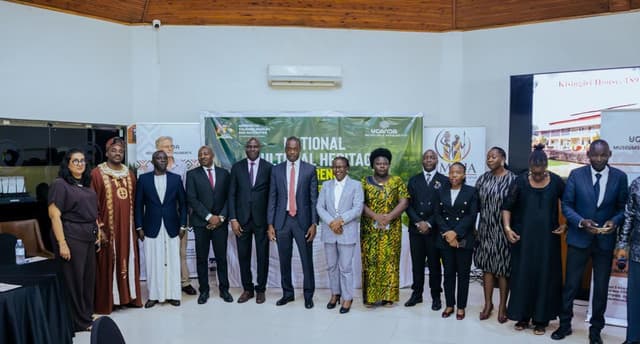
The call came Tuesday at the Third National Cultural Heritage Conference, convened by the Ministry of Tourism, Wildlife, and Antiquities at Fairway Hotel. The annual gathering coincides with African World Heritage Day and serves as a precursor to International Museum Day.
Held under the theme “Urbanisation without Eraser: Architectural Heritage in Uganda’s Changing Urban Centres,” the conference brought together policymakers, urban planners, cultural leaders, academics and private sector players to address the growing tension between modernization and heritage conservation.
Opening the conference, the Minister of State for Tourism, Wildlife and Antiquities, Martin Bahinduka Mugarra, warned that Uganda risks losing more than just buildings if current trends persist.
“This gathering is both timely and necessary.
It comes at a moment when Uganda’s urban centers are experiencing unprecedented transformation; driven by infrastructure expansion, demographic shifts, economic ambition, and global environmental pressures. Yet, as we pursue modernization, we must ask ourselves a critical question: Can development occur without erasing the very heritage that defines us?”
He emphasized that urban heritage goes beyond physical structures, describing it as a “living system” embedded in memory, identity, and social meaning.
“Urban heritage is not merely a collection of old buildings or historic sites. It is a living system that comprises physical structures, spatial arrangements, cultural practices, and collective memory,” Mugarra said.
Across cities such as Kampala, Gulu, Jinja, and Fort Portal, he noted that historic buildings and cultural landscapes are steadily disappearing, often without documentation or consultation—posing not just a cultural threat but a developmental one.
“When heritage is erased, we lose not only our past but also valuable opportunities for tourism, education, identity formation, and sustainable urban planning,” he added.
Mugarra also appealed to stakeholders to build cities that tell Uganda’s stories but not erase them.
The minister called for a shift toward “heritage-sensitive planning,” adaptive reuse of historic buildings and stronger community involvement in urban governance, suggesting Uganda could adopt a “Heritage First” approach to redevelopment.
The conference aligns with global frameworks, including the UNESCO Historic Urban Landscape approach and United Nations Sustainable Development Goal 11, particularly Target 11.4 on protecting cultural and natural heritage.
Permanent Secretary at the ministry, Doreen Katusiime, echoed similar concerns, framing architectural heritage as central to Uganda’s development agenda under Uganda Vision 2040 and the National Development Plan IV
“Our built heritage, whether in the form of historic buildings, traditional settlements, sacred sites, or colonial-era structures, is more than physical infrastructure. It is a repository of memory, identity, and meaning, she said.
She acknowledged the pressures of rapid urbanisation, noting that many heritage assets are under threat from demolition and unregulated development.
“Historic buildings are being demolished to make way for new developments. Traditional urban landscapes are being transformed beyond recognition. In some cases, we risk losing not just structures, but entire narratives embedded within them,” she said.
The ministry is currently strengthening the legal framework under the Museums and Monuments Act, including drafting regulations for historic buildings and expanding the list of gazetted heritage sites. Already recognized structures include the Parliament of Uganda, Uganda National Theatre, Uganda Museum, Namirembe Cathedral, Rubaga Cathedral, and the Namugongo Martyrs Shrines.
Recent restoration efforts include the refurbishment of Mugaba Palace and upgrades to the Uganda Museum, alongside ongoing projects such as the Karamoja Regional Museum in Moroto and the Mwanga–Kabalega heritage site in Dokolo.
Officials say the conference will go along way in influencing policy recommendations and stronger institutional partnerships to guide future urban planning.
The conference positioned heritage conservation not as a barrier to development but as a critical pillar for sustainable, inclusive, and culturally grounded urban growth.