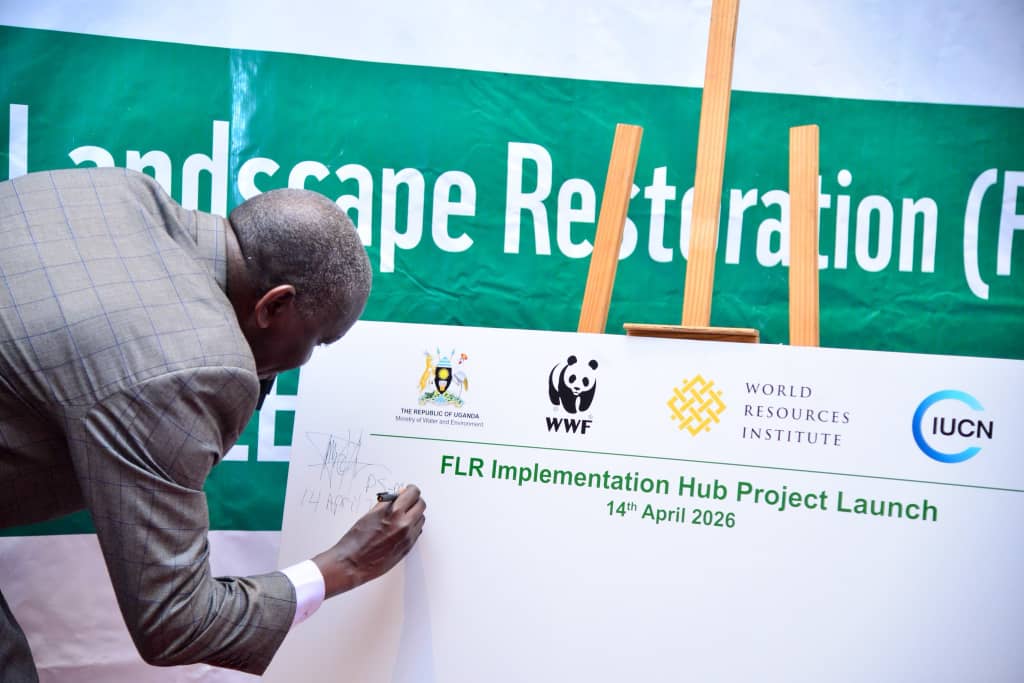
Uganda Launches Forest Restoration Hub to Reclaim 200,000 Hectares and Boost Climate Action
By our reporter
KAMPALA — The Ministry of Water and Environment has launched the Forest Landscape Restoration (FLR) Implementation Hub Project, a major step in Uganda’s efforts to reverse forest degradation, strengthen climate resilience, and support livelihoods.
The project was officially unveiled by Permanent Secretary Dr. Alfred Okot Okidi at a function held at Kampala Serena Hotel, bringing together key stakeholders from government, development partners, civil society, and the private sector.
The five-year initiative (2026–2030), financed by the German Federal Ministry for the Environment, Nature Conservation, Nuclear Safety and Consumer Protection through Germany’s International Climate Initiative, is designed to accelerate Uganda’s restoration agenda through a coordinated and programmatic approach.
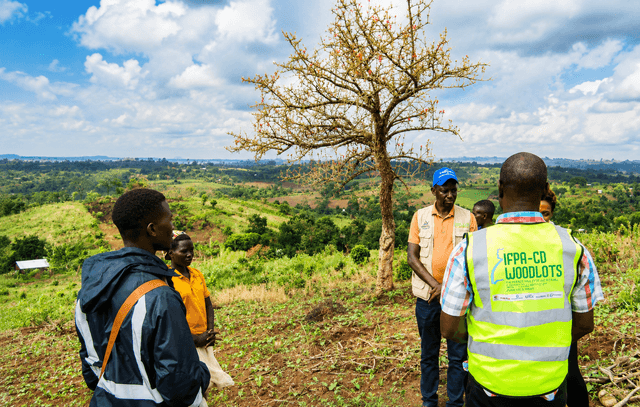
The FLR Implementation Hub will initially be piloted in the Agoro Agu landscape in the Acholi sub-region and the Rwenzori sub-landscape—two areas that have faced significant environmental pressure due to deforestation, land degradation, and climate variability.
According to the Ministry, the project aims to restore approximately 200,000 hectares of degraded forest landscapes and sequester up to 500,000 tonnes of carbon dioxide equivalent. It will also support biodiversity conservation, enhance ecosystem services, and improve community livelihoods, particularly for populations dependent on natural resources.
The project is being implemented by the Ministry of Water and Environment through the Forestry Sector Support Department, in collaboration with the International Union for Conservation of Nature, World Wide Fund for Nature Uganda, and the World Resources Institute.
Speaking at the launch, Dr. Okidi underscored the urgency and strategic importance of the initiative, noting that Uganda’s forests remain critical to both ecological and economic stability.
“Uganda’s forest landscapes are central to our ecological integrity, economic productivity, and climate resilience. However, we continue to face significant challenges of forest degradation and deforestation, driven by population pressures, unsustainable land use practices, and competing development needs,” he said.
“It is, therefore, both timely and strategic that we gather here today to launch a coordinated, scalable, and investment-driven approach to Forest Landscape Restoration.
The FLR Implementation Hub represents a shift from fragmented interventions to a more integrated and programmatic model—one that strengthens governance, mobilizes financing, and delivers measurable restoration outcomes at scale,” he added.
Dr. Okidi further highlighted the project’s tangible environmental and socio-economic targets.
“The initiative aims to restore approximately 200,000 hectares of degraded forest landscapes and sequester 500,000 tonnes of carbon dioxide equivalent while supporting livelihoods, biodiversity conservation, and climate adaptation. The project will also work to improve the existing reporting systems at the Ministry to enhance our reporting on achievements in forestry at national and global levels, including the Bonn Challenge, where the Barometer tool will interface with the WEIS FOMIS,” Okidi affirms.
The launch also outlined key objectives, including raising awareness about the FLR Hub and its alignment with Uganda’s national restoration priorities, building a shared understanding among stakeholders, and agreeing on the Terms of Reference (ToRs) and governance structure for the National FLR Multi-Stakeholder Platform.
Dr. Okidi emphasized that collaboration will be central to the success of the initiative noting that government needs strong partnerships with the private sector, civil society, academia, and district local governments.
Uganda continues to grapple with rapid deforestation, with forest cover declining over the past decades due to agricultural expansion, charcoal burning, illegal logging, and population pressure. This has contributed to soil degradation, reduced water catchment capacity, and increased vulnerability to climate shocks such as floods and prolonged droughts.
Environmental experts have long warned that fragmented restoration interventions and limited coordination among stakeholders have slowed progress, despite numerous commitments at both national and international levels.
The FLR Hub is expected to address these gaps by providing a centralized platform for coordination, knowledge sharing, and resource mobilization, while aligning Uganda’s restoration efforts with global commitments such as the Bonn Challenge and the AFR100.
The initiative is also aligned with Uganda Vision 2040 and Uganda’s obligations under the United Nations Framework Convention on Climate Change, positioning the country to contribute meaningfully to global climate mitigation and adaptation goals.