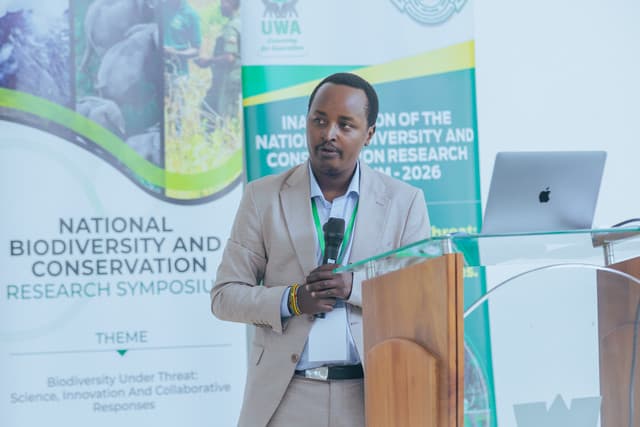
When nature comes under threat, science becomes the first line of defence.
Uganda's wildlife is in trouble. Habitats are shrinking. Elephant populations are falling. Human-wildlife conflict is intensifying. And climate change is quietly redrawing the ecological map in ways that few fully understand. But inside this mounting crisis, a quieter story is unfolding one measured not in headlines, but in data points, field surveys, and scientific breakthroughs that are steadily, methodically, turning the tide.
Research has become Uganda's most powerful conservation tool.
Nowhere is this clearer than in the mountain gorilla sanctuaries of Mgahinga. Scientists discovered that disease could jump between local communities and gorillas, animals that share 97.8% of their genetic material with humans, with potentially catastrophic consequences. That discovery did not simply generate a paper. It generated protocols, interventions, and protections that are actively saving both gorilla lives and human ones.
John Makombo, Commissioner for Biodiversity Management at Uganda Wildlife Authority, has watched this transformation firsthand.
"We have done a lot of research on zoonosis disease transmission, and we have seen how we can transmit disease from humans to the gorillas," he says. "And so in doing this, we have put in place interventions that are going to minimise that transmission." Knowledge, here, is literally the difference between survival and extinction.
The same logic applies across ecosystems. Research tracking animal movement patterns has informed smarter strategies for managing human-wildlife conflict, understanding where elephants roam and why, enabling more targeted interventions rather than blanket restrictions that punish communities. Studies on invasive plant species are guiding habitat restoration efforts. Climate research tracking the retreat of the Rwenzori glaciers and the upward migration of species like the three-horned chameleon is reshaping long-term conservation planning, forcing managers to think decades ahead rather than reacting crisis by crisis.
"We used to get the three-horned chameleon in the lower forests of the Rwenzori," Makombo explains. "Now, because of changes in temperatures and global warming, it is moving to the eastern zone to higher ground where it can survive. These are the signals climate research is giving us, and we must act on them."
Yet the researchers themselves are candid about a persistent gap. Scientific findings too often remain trapped in academic journals, never reaching the managers, policymakers, and communities who need them most. Dr. Emmanuel Akampurira, Manager of Research at Uganda Wildlife Research and Training College, describes it as the ivory tower problem.
"Sometimes we sit in our ivory towers and do publications," he says bluntly. "But these publications do not translate into action. By having joint platforms with UWA, which are the main practitioners managing wildlife on the ground, we can translate research results into actionable outcomes that genuinely help conservation."
That is precisely why platforms that unite researchers, practitioners, and communities matter so deeply. As Dr. Carolina Asiimwe, Assistant Commissioner for Research and Ecological Monitoring at UWA, argues, the species most at risk today are often those least studied.
"Some numbers are disappearing, and we don't know because too little has been done to study them," she warns. "We need specialized partners focusing on these neglected species so that we have a clear picture of the state of our biodiversity, know where to focus our resources, and know how to prioritize which ecosystems need urgent attention."
The lesson is urgent and clear. In the fight for Uganda's biodiversity, research is not a luxury. It is the shield. And right now, that shield needs strengthening with more funding, more collaboration, and a firm commitment to ensuring that what scientists discover in the field does not die quietly on a library shelf, but lives on in the decisions that determine whether Uganda's wild heritage survives.