Kampala to Halve Air pollution by 2030: Clean Air Drive Gains Continental Spotlight as Public and Private Sectors Unite Against a Silent Killer in Pretoria.
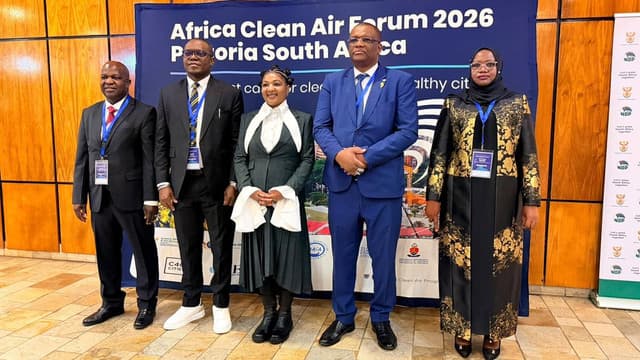
PRETORIA, South Africa — Clean air has moved from being an environmental aspiration to becoming one of Africa’s most urgent development priorities, with Kampala emerging as one of the continent’s leading examples of how governments, traditional institutions, civil society and the private sector can work together to confront one of the world’s deadliest public health threats.
That message dominated discussions at the Africa Clean Air Forum 2026 in Pretoria, where delegates argued that Africa’s battle against air pollution will not be won through monitoring alone, but by ensuring that data shapes policy, investment and everyday decision-making.
Held under the theme “Investment Case for Clean Air and Healthy Cities,” the forum brought together policymakers, researchers, city authorities, civil society organisations, development partners and clean air advocates from across the continent.
For Kampala, the conference became an opportunity to showcase a growing coalition extending far beyond government institutions.
Whilst Kampala Capital City Authority (KCCA) highlighted the city’s policy reforms and infrastructure investments, private and non-state actors demonstrated how community participation and public awareness are becoming equally critical pillars of Uganda’s clean air agenda.
One of the strongest examples came from the Kingdom of Buganda, whose “Empewo Bwe Bulamu” (Air is Life) initiative has positioned the cultural institution as an influential partner in environmental protection.
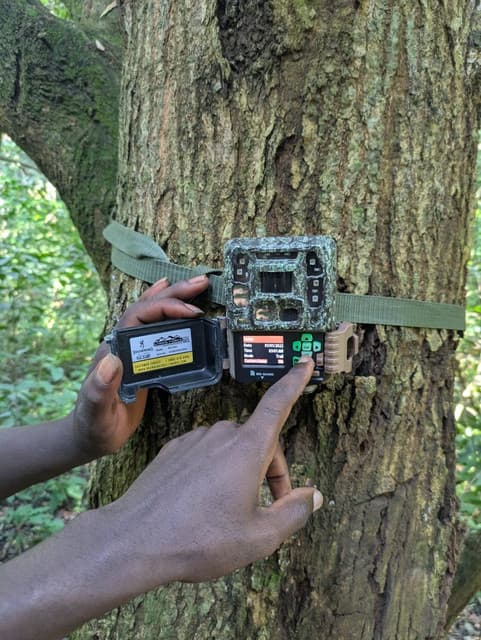
Supported by the EPIC Air Quality Fund through the University of Wisconsin–Madison, the initiative has installed 15 real-time low-cost air quality sensors across Kampala.
Working with New York University Abu Dhabi, the Kingdom also established a public air quality dashboard at Bulange, enabling citizens to access real-time pollution information.
The Programme has already trained more than 73 Air Quality Ambassadors drawn from all 18 counties of Buganda to translate scientific information into community action.
The initiative received an additional boost following the signing of a Memorandum of Understanding between the National Environment Management Authority (NEMA) and the Kingdom, strengthening collaboration on environmental conservation, including air pollution management.
Private sector calls for action beyond monitoring
Civil society organization Public Square EA used the Pretoria forum to argue that collecting air quality data alone will not solve Africa’s pollution crisis.
Represented by Owomugisha Julian Tabaro and Arinda Mackline, the organisation challenged governments and development partners to move beyond installing monitoring equipment.
Their central message was that Africa needs air quality data that changes decisions.
According to the organisation, pollution data should directly influence transport planning, waste management, household energy policies, school environments, markets, public health systems and urban planning.
Public Square EA said its work continues to focus on making air quality information understandable and accessible, strengthening citizen and institutional monitoring, promoting youth and community engagement, linking clean air to public health and economic productivity, supporting evidence-based policy discussions and building partnerships capable of translating scientific evidence into practical action.
Mackline told delegates that monitoring is merely the first step.
She argued that “data only becomes valuable when citizens, institutions and policymakers can easily understand and use it to demand accountability”.
KCCA Executive Director Sharifah Buzeki presented what she described as “The Kampala Experience,” outlining how the city has transformed its air quality programme over the past eight years.
Beginning with just a handful of monitoring stations in 2018, Kampala now operates 134 air quality monitoring stations, including hyperlocal sensors providing real-time public information.
Despite recording average particulate pollution levels of 39 micrograms per cubic metre (µg/m³)—still significantly above international health guidelines, the city has committed to reducing pollution by 50 percent by 2030.
The target is anchored in several policy instruments, including the National Environment Act, the Public Health Act, the Kampala Clean Air Action Plan 2025–2030, and the forthcoming Kampala Air Quality Management Bill.
Beyond legislation, KCCA is investing in greener urban mobility through expanded pedestrian walkways, dedicated cycling lanes, electric buses, tax incentives for electric vehicles and motorcycles, and a modern traffic control centre expected to reduce congestion and vehicle emissions.
”These initiatives are not only about reducing pollution, but about building a culture of green mobility and healthier living,” Buzeki told delegates.
Buzeki stressed that clean air cannot be delivered by government alone.
She highlighted growing community participation through weekend clean-up campaigns, Village Health Teams integrating air quality awareness into community health work, and journalists trained as Clean Air Champions to improve public understanding of pollution.
The city’s efforts have earned international recognition, including winning Uganda’s National Environment Sustainability Award 2026, becoming the first African city inducted into the International Network of Tree Cities, and securing nomination among 15 global finalists for the Guangzhou International Award for Urban Innovation.

A continent facing a silent health crisis
The urgency behind Pretoria’s discussions is reflected in mounting health statistics.
Air pollution remains one of the world’s leading environmental causes of death, claiming approximately 6.8 million premature lives every year.
In Kampala, experts estimate that nearly one in every five deaths is associated with air pollution, particularly exposure to fine particulate matter (PM2.5) and ground-level ozone.
These microscopic particles penetrate deep into the lungs and bloodstream, increasing the risk of respiratory disease, cardiovascular illness, stroke and cancer.
Health experts report that pollution-related illnesses continue to place growing pressure on Uganda’s healthcare system, with the Lung Institute at Mulago National Referral Hospital treating increasing numbers of patients suffering from respiratory complications.
Yet public awareness remains alarmingly low.
A 2025 survey conducted in Kampala found that 95 percent of respondents had never heard of the Air Quality Index (AQI), 94 percent had never actively searched for information about air pollution, and 90 percent underestimated the number of deaths linked to polluted air.
At the same time, respondents overwhelmingly supported stronger interventions, including better waste management, stricter regulation of old vehicles and expanded public education.
Throughout the Pretoria forum, one message repeatedly surfaced: clean air is no longer simply an environmental issue.
It is increasingly recognised as a public health necessity, an economic imperative, a governance challenge and a measure of how seriously African cities are preparing for rapid urbanization.
Speakers warned that monitoring pollution without translating evidence into policy risks producing sophisticated datasets that fail to save lives.
For Kampala, the path forward increasingly depends on sustained collaboration between city authorities, traditional institutions, regulators, researchers, civil society, communities and the private sector.