
Uganda Launches Taskforce to Reverse Lion Decline and Strengthen Conservation of Other Carnivores
The roar of Uganda's lions is becoming increasingly rare across some of the country's most celebrated wilderness landscapes. Once a defining feature of its savannah ecosystems, the country's lion population has fallen to an estimated 291 individuals, raising concerns about the future of one of Africa's most iconic predators.
The latest figures show a decline from 493 lions in 2011 and more than 600 in 2000, representing a roughly 40 per cent drop since 2011.
About 240 of the remaining lions are concentrated in Murchison Falls National Park, leaving Queen Elizabeth National Park with just 39 and Kidepo Valley National Park with 12.
Against this backdrop, Uganda's government has launched a new intervention to strengthen the protection and recovery of lions and other large carnivores.
On November 10, the Minister of Tourism, Wildlife and Antiquities, Col.Rtd. Tom Butime, launched the National Lion/Large Carnivore Conservation Taskforce in Kampala. The initiative brings together conservation scientists, government institutions, universities, research organisations and tourism-sector representatives to advise the ministry and Uganda Wildlife Authority (UWA) on large carnivore conservation.
The taskforce will be chaired by Michael Keigwin, founder trustee and director of the Uganda Conservation Foundation, with UWA serving as its secretariat.
Speaking at the launch, Butime emphasised the ecological and economic importance of protecting large predators.
"Protection of lions and other iconic wildlife species should be prioritised because they attract tourists and immensely contribute to revenue generation, employment and livelihoods of our people," he said.
The taskforce will support implementation of Uganda's Strategic Action Plan for Large Carnivore Conservation (2024–2034), which targets a 30 per cent increase in viable large carnivore populations over ten years and a reduction in poaching of at least 50 per cent.
As apex predators, lions play an important role in maintaining ecological balance. Through predation, they influence prey populations and animal behaviour, helping shape the dynamics of savannah ecosystems.
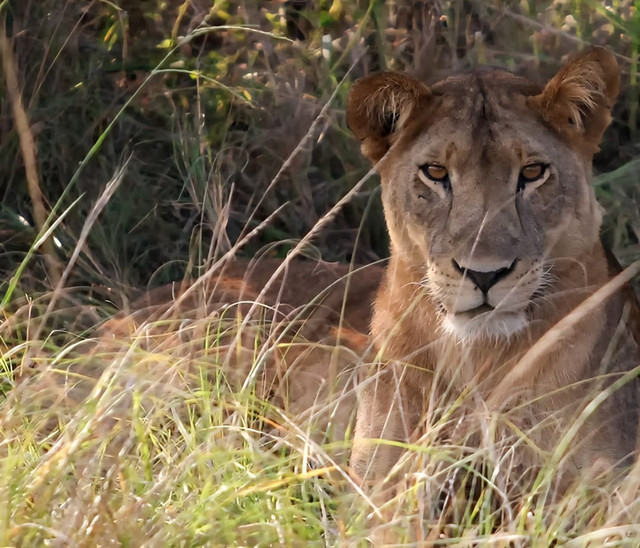
Their decline, therefore, is not simply a question of losing an iconic species. It raises wider concerns about the health and resilience of the landscapes they inhabit.
Leopards also face pressure from habitat loss and poaching, although stronger population-density pockets remain in Lake Mburo and Murchison Falls. Spotted hyenas, meanwhile, appear to be demonstrating greater resilience in several landscapes.
However, the survival of one carnivore cannot compensate for the ecological loss of another. Different predators occupy different niches and perform distinct functions within ecosystems.
Uganda's large carnivores face multiple threats, including habitat degradation, declining prey populations, illegal hunting, poisoning, snaring and retaliatory killings.
Human-wildlife conflict is particularly destructive. When lions attack livestock, communities neighbouring protected areas can suffer significant economic losses. In response, some resort to poisoning carcasses to kill predators.
A single poisoned carcass can wipe out several lions while also killing scavengers, particularly vultures, that feed on contaminated remains.
Wire snares set for bushmeat present another danger. Although intended for smaller animals, they can trap, maim and kill large carnivores.
The taskforce is expected to support stronger ranger deployment, snare-removal operations, modern anti-poaching technology and satellite tracking collars to improve monitoring and protection.
Experts argue that the future of large carnivores is closely connected to the willingness and ability of neighbouring communities to coexist with wildlife.
For households that depend on livestock, losing cattle to predators can undermine livelihoods and deepen hostility towards conservation.
The taskforce's proposed community programmes and financial incentives could help address this challenge. However, these interventions must deliver practical benefits, including improved livestock protection and more effective responses to wildlife-related losses.
The taskforce also brings together a broad range of expertise, including Dr Alex Braczkowski, Prof. Charles Masembe, Charles Tumwesigye, Dr Simon Nampindo, Dr Ludwig Siefert, Candia Leone, Prof. Moses Muhumuza and Benon Ssebina Katumba.

Its mandate includes reviewing existing conservation programmes, identifying emerging threats, advising on priority interventions and mobilising resources for large carnivore recovery.
This coordination could strengthen collaboration between researchers, UWA rangers, conservation organisations, universities and private tourism operators.
Lions are among Uganda's most important wildlife tourism attractions. Their presence strengthens the appeal of Murchison Falls, Queen Elizabeth and Kidepo Valley national parks, supporting safari operators, accommodation providers, guides and communities dependent on tourism.
Lions’ ecological importance extends beyond tourism receipts. Their survival depends on healthy habitats, sufficient prey populations and functioning predator-prey relationships.
The new taskforce offers an opportunity to address these interconnected challenges. But its establishment is only the beginning.


