Weak SPS Communication Blamed for Rising Rejection of Uganda’s Horticulture Exports in the EU
Uganda’s horticulture export sector is under growing pressure as stakeholders point to weak communication of sanitary and phytosanitary (SPS) requirements as a key driver of repeated rejection of fresh produce in international markets, particularly the European Union.
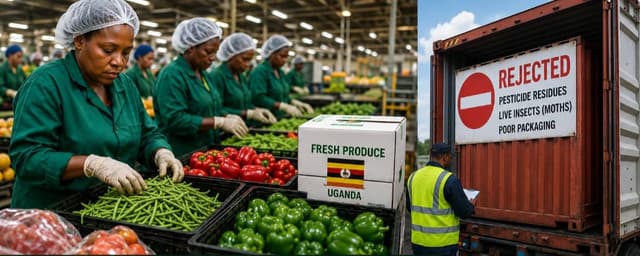
Exporters say consignments of fruits and vegetables from Uganda continue to be intercepted abroad due to issues such as pesticide residue levels, infestation by pests including moths, and poor packaging standards. These failures, they note, result in the destruction of shipments and significant financial losses for both private exporters and the national economy.
The concerns were raised during a stakeholders’ consultative forum on strengthening communication for fresh produce exports under the EU–Uganda SPS Project, held on Thursday, at Golden Tulip Hotel in Kampala.
The meeting was organised by the Centre for Agriculture and Biosciences International (CABI), with support from the European Union and the Ministry of Agriculture, Animal Industry and Fisheries (MAAIF), among other partners. It brought together actors across the horticulture value chain to assess communication systems, identify gaps, and develop more effective strategies for SPS information dissemination.
According to organisers, the engagement is part of a broader effort to improve Uganda’s capacity to meet stringent EU market requirements while boosting exports of high-value horticultural crops such as avocado, capsicum, garden eggs, mangoes, and okra.
Exporter Michael Owino, who supplies fresh fruits and vegetables to the EU market, said Uganda continues to lose revenue due to preventable compliance failures linked to weak awareness of export standards.
He noted that “many exporters incur heavy losses after their consignments are rejected overseas, often forcing them out of business.”
Caroline Nakinga, the SPS Programme Manager, said the meeting was convened to strengthen the way SPS standards are communicated across the fruit and vegetable sector.
She observed that Uganda’s produce frequently fails to meet EU requirements due to gaps in compliance at production and export stages.
“Because in the European Union and other international markets, we have always been intercepted. That means our produce falls short of the required standards and is rejected on arrival, leading to losses for exporters,” she said.
Nakinga emphasized that EU standards are strict and must be fully adhered to by all actors, from farmers to exporters.
“So we have to communicate the right information—correct regulations and ensure farmers and exporters understand and comply with the standards,” she added.
Dr. Phillip Bill Okaka, a Development Communications Manager at CABI, stressed that effective communication remains central to improving compliance and reducing export rejections.
He said SPS messaging must be strengthened and tailored to reach all stakeholders in the value chain, including rural farmers.

The forum further highlighted the need to align SPS visibility campaigns with national and international events such as agricultural shows, farmer field days, harvest money expos, the International Day of Plant Health, and World Food Day.
Led by CABI, the Ministry of Agriculture, Presidential Advisory Committee on Exports and Industrial Development ( PACEID), and National Agricultural Research Organisation (NARO), participants also discussed the need to strengthen monitoring and reporting systems to track media impact and ensure consistent messaging on SPS standards.
Experts further noted that beyond export earnings, strict adherence to SPS standards is critical in safeguarding consumer health by preventing foodborne illnesses that can lead to serious health complications or even death.
Stakeholders concluded that stronger public-private collaboration remains essential in closing communication gaps, improving compliance, and unlocking Uganda’s full potential in the global horticulture export market.
The European Union requires strict compliance with food safety and plant health laws to prevent the spread of pests and diseases. Shipments face border rejections or bans if they contain excessive pesticide residues or live insects such as moths and the false codling moth, which are considered high-risk for crop biosecurity. EU standards further require that produce meets strict Sanitary and Phytosanitary (SPS) conditions, Maximum Residue Limits (MRLs) for pesticide traces, and marketing standards covering quality, size, and maturity before approval for entry into European markets.
The issue is not limited to horticulture alone, as new regulatory frameworks such as the European Union Deforestation Regulation (EUDR) are also reshaping agricultural exports, particularly for coffee. Under this regulation, coffee exported from countries like Uganda must be proven to be deforestation-free and legally produced.
This means exporters are required to demonstrate that coffee has not been grown on land cleared after the EU’s cut-off date for deforestation, and they must provide traceability data including geolocation of farms, production records, and land legality documentation. For farmers, especially smallholders, this introduces new compliance demands that include farm registration, mapping of production areas, and maintaining production records, while also ensuring no forest land is converted into new coffee plantations. In practice, this increases reliance on cooperatives, exporters, and government extension systems to help farmers meet the technical requirements needed to access the EU market.