Minister Rwamirama Warns of Heavy Cost of Neglecting Animal Health at Global Summit in Paris
Uganda’s Minister of State for Animal Industry, Bright Rwamirama, has issued a strong global appeal for increased investment in animal disease prevention and control, warning that countries risk devastating economic, food security and public health consequences if they continue underfunding animal health systems.
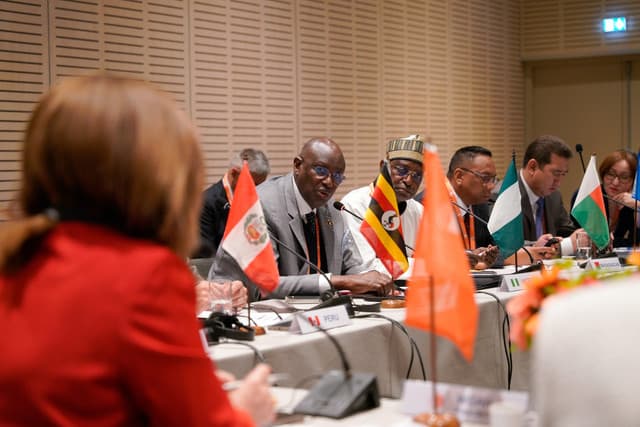
Speaking during the 93rd General Session of the World Organisation for Animal Health in Paris, France, Rwamirama said governments and stakeholders must treat animal disease control as a strategic global priority rather than an optional expenditure.
“If we underinvest in prevention today, we will pay more tomorrow through disease outbreaks, food and nutrition insecurity, trade disruption, public health emergencies, and economic losses,” Rwamirama said.
“Investing in animal disease control is a strategic investment; it is not an option,” he added.
Uganda is participating in the high-level global summit with a delegation led by Rwamirama, alongside veterinary and animal industry officials. The week-long gathering has brought together governments, scientists, policymakers, and animal health experts from across the world to deliberate on growing biological threats and the future of global animal health systems.
The summit is focused on adopting international standards, discussing technical matters of global concern, passing administrative and technical resolutions including the 8th Strategic Plan, and filling vacant positions within the organisation’s governance structures.
Animal Health at the Centre of Global Security
This year’s session is being held under the broader theme of strengthening investment in animal health amid increasing disease outbreaks worldwide.
The discussions intensified during the Animal Health Forum on the second day of the summit under the theme: “Investing in Animal Health to Secure Everyone’s Future.”
Experts examined how governments and private actors make investment decisions in animal health, with debates centred on the economic burden of animal diseases, financing mechanisms, co-investment across agricultural value chains, digitalisation of veterinary services, and the role of innovation in reducing risks.
Opening the summit, Dr. Emmanuelle Soubeyran, the Director General of the World Organisation of Animal Health delivered a warning that despite overwhelming scientific evidence, the world continues to dangerously underinvest in animal health.
“Despite clear evidence, we continue to underinvest in animal health globally,” she said.
Soubeyran emphasized that animal health remains central to food security, livelihoods, international trade, biodiversity conservation and global health security, yet receives only 0.6 percent of total global health spending.
“Animal health is our health, it’s everyone’s health,” she said, urging countries to rethink funding priorities in the face of rising biological threats.
Rising Global Disease Threats
The summit heard alarming findings from the second edition of the State of the World’s Animal Health Report, which paints an increasingly grim picture of disease outbreaks across continents.
According to the report, more than 2,000 outbreaks of avian influenza were reported by 64 countries and territories between 2025 and 2026, leading to the loss or culling of more than 140 million poultry birds globally.
Delegates also discussed the resurgence of Foot and Mouth Disease in Southern Africa and Europe, the continued spread of African Swine Fever through long-distance transmission routes, and the growing threat posed by the New World screwworm — a flesh-eating parasitic fly that has spread across Central America and is expanding northward.

Soubeyran warned that such evolving threats demonstrate why countries can no longer act in isolation.
“Diseases do not respect borders, and no country can face today’s animal health challenges alone,” she said.
She added that biological threats continue to have far-reaching consequences on public health, trade, biodiversity, food systems and national security, underscoring the urgent need for stronger prevention systems, preparedness, and international solidarity.
Uganda’s Stake in Animal Health
For Uganda, where livestock farming supports millions of households and contributes significantly to agricultural exports, discussions at the Paris summit carry major economic significance.
The country continues to battle periodic outbreaks of livestock diseases that affect farmers’ incomes, cross-border trade, and food production. Veterinary experts argue that stronger surveillance systems, vaccination programmes, disease preparedness and investment in modern animal health infrastructure are essential to protecting Uganda’s livestock sector.
Rwamirama’s remarks echoed broader calls by African nations for increased financing toward preventive veterinary services, especially as climate change, cross-border animal movement and global trade heighten the risk of disease transmission.
As deliberations continue in Paris, delegates are expected to pass new resolutions aimed at strengthening global coordination, disease surveillance and investment in resilient animal health systems.