Uganda Clears Starlink for Operations After Regulatory Deal
President Yoweri Kaguta Museveni has witnessed the signing of a landmark operational licence agreement between the Uganda Communications Commission (UCC) and Starlink, officially paving the way for the satellite internet provider to begin operations in Uganda.
The agreement, signed at State House Entebbe on Friday, marks Uganda’s formal entry into the growing global network of countries using low-Earth orbit satellite internet technology to expand connectivity, especially in underserved and hard-to-reach areas.
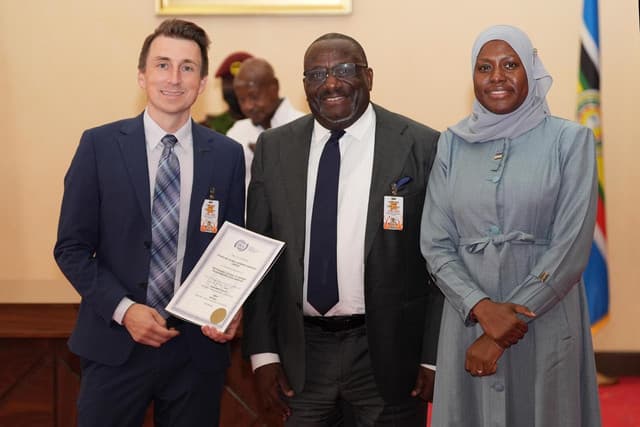
The deal was signed by UCC Executive Director George William Nyombi Thembo and Starlink representatives led by Ryan Goodnight, Senior Director for Market Access and Development at SpaceX.
President Museveni described the development as a major milestone for Uganda’s ICT sector but emphasized that government priorities remain centered on security, accountability, and revenue assurance within the telecommunications industry.
“Our interest remains security, revenue assurance, and ensuring proper accountability within the telecommunications sector so that we clearly know what is happening with telecom companies and who the customers are,” Museveni said during the meeting.
Under the licensing framework agreed upon with the government, Starlink will not immediately operate independently from space without local oversight. Instead, the company must first establish several critical operational structures inside Uganda.

According to officials from the Ministry of ICT and UCC, Starlink will be required to:
Establish a national gateway within Uganda;
Set up a physical point of presence in the country;
Open operational offices with technical, legal, and support staff;
Ensure all activated devices are registered locally;
Comply fully with Uganda’s telecommunications and security regulations.
Following the signing ceremony, UCC handed over provisional operational certification to Starlink, clearing the company to begin preparations for rollout.
The Permanent Secretary at the Ministry of ICT and National Guidance, Dr. Aminah Zawedde said the agreement followed months of negotiations aimed at balancing innovation with national regulatory interests.
“We are witnessing the signing of the provisional licence for Starlink after agreeing on the terms and features of the licence,” Dr. Zawedde said.
The company is expected to begin phased deployment targeting remote regions where traditional fibre and mobile broadband infrastructure remains weak or unavailable.
Unlike conventional telecom operators such as MTN Uganda and Airtel Uganda that rely heavily on towers and terrestrial infrastructure, Starlink uses a constellation of low-earth orbit satellites to beam internet directly to user terminals on the ground.
Users will require Starlink kits comprising a satellite dish, router and terminal equipment to access the service.
The approval of Starlink is expected to significantly reshape Uganda’s digital connectivity landscape.
Uganda’s internet penetration currently remains below universal coverage, with rural and hard-to-reach communities facing expensive, slow or unreliable internet services. Large parts of northern Uganda, island districts, mountainous regions and remote tourism destinations continue to experience connectivity gaps.
Government officials believe Starlink’s entry could help close that divide.
Ryan Goodnight said the company intends to expand affordable internet access while supporting sectors such as education and health through connectivity partnerships.
“We believe this partnership will lower internet costs and enable more people to join the digital economy,” he said.
"We are ready to comply with Uganda's laws and work closely with the government and UCC to ensure successful implementation," he added.
He revealed that Starlink plans to donate internet connectivity devices to selected schools and health facilities across the country.
For Uganda’s growing digital economy, the development could accelerate:
Online education and e-learning;
Telemedicine and digital health services;
E-commerce and digital entrepreneurship;
Remote work opportunities;
Tourism connectivity in remote national parks and lodges;
Government digital services.
The move could also intensify competition in Uganda’s internet market, potentially forcing existing telecom operators to improve service quality and pricing.
Starlink’s formal entry comes months after Ugandan authorities moved to halt unauthorized use of the service earlier this year amid concerns surrounding regulation and national security during the election period.
Government officials later engaged the company in negotiations to ensure compliance with Uganda’s laws before granting operational approval.
In April last year, President Museveni revealed that he had held discussions in Nakasero with Starlink representatives Ben MacWilliams and Brandi Oliver alongside Ugandan and U.S. diplomats regarding the company’s plans to establish affordable internet access in Uganda.
The Friday signing ceremony was attended by U.S. Ambassador to Uganda William Popp, Uganda’s Ambassador to the United States Robie Kakonge, officials from the ICT Ministry and representatives from Starlink and SpaceX
Analysts say Starlink’s arrival could become one of the country’s most significant telecommunications developments in recent years, particularly for rural connectivity and access to the global digital economy.