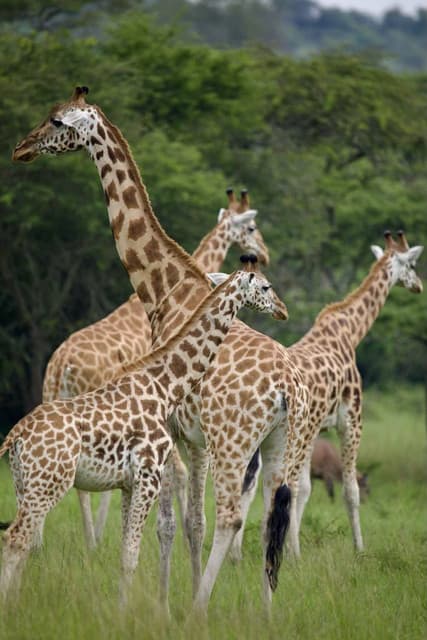
Uganda Unveils Wildlife Resources Report with progress in species and habitat protection
By our Reporter
Kampala, April 28, 2026 — Uganda has released its most comprehensive biodiversity assessment to date, signaling measurable progress in wildlife recovery and ecosystem protection, even as conservation challenges persist.
The State of Wildlife Resources in Uganda Report 2026, launched by the Uganda Wildlife Authority (UWA), presents a sweeping national account of the country’s biodiversity, spanning mammals, birds, plants, fungi, reptiles, amphibians, bats and invertebrates.
Unlike previous assessments that focused largely on large mammals, the new report offers a broader scientific picture of Uganda’s natural heritage, consolidating ecological data from across ecosystems.
Findings show that Uganda remains one of Africa’s most biologically diverse countries, with over 18,000 recorded species. Several wildlife populations are recovering under sustained conservation efforts.
Buffalo numbers rose from 32,235 to 41,548, while rhinos increased from 43 to 61—marking one of the country’s most celebrated conservation success stories. Chimpanzee populations also grew from 5,072 to 6,075, while zebras, waterbucks, and Uganda kob all registered steady gains.
Uganda’s global standing as a great ape destination remains intact, with mountain gorillas holding steady at 459 individuals.
Launching the report, Tourism Minister Tom Butime said the findings reinforce the broader value of conservation beyond wildlife protection.
“This report demonstrates that conservation is not only about protecting wild animals. It is equally about safeguarding plant life, habitats, ecological services, and the natural systems upon which tourism, climate resilience, water security, and community livelihoods depend,” he said.
The report also breaks new ground by highlighting the importance of plant biodiversity, documenting threatened indigenous species including cycads, wild coffee, and crop wild relatives essential for food security and climate resilience.
UWA Board Chairman James Kalema said the report provides critical scientific guidance for future conservation investment.
“This report gives us a clear measure of where Uganda is registering returns on conservation investment and where institutional attention must now be intensified,” he noted.
UWA Executive Director James Musinguzi said the findings reflect a shift toward science-led conservation, supported by modern technologies such as aerial surveys, SMART ranger patrols, Earth Ranger tracking systems and camera traps.
“This publication presents a consolidated national account of where Uganda stands in biodiversity conservation today. It shows measurable gains in species restoration, stronger monitoring systems, and clearer identification of the threats that must now be addressed,” he said.
He added that UWA will continue strengthening habitat restoration, invasive species management, and ecological research while improving data integration across institutions.
Despite the gains, officials caution that conservation progress remains fragile. The report identifies habitat loss, climate change, invasive species, and human-wildlife conflict as ongoing threats.