Uganda Wildlife Report Raises Concern as Lions, Elephants Decline Despite Conservation Gains
By Admin
Kampala, April 29, 2026 - Uganda’s latest wildlife report has raised concern over declining populations of both lions and elephants, with the trend more significant among lions, drawing attention from conservation authorities, and the country at a whole.
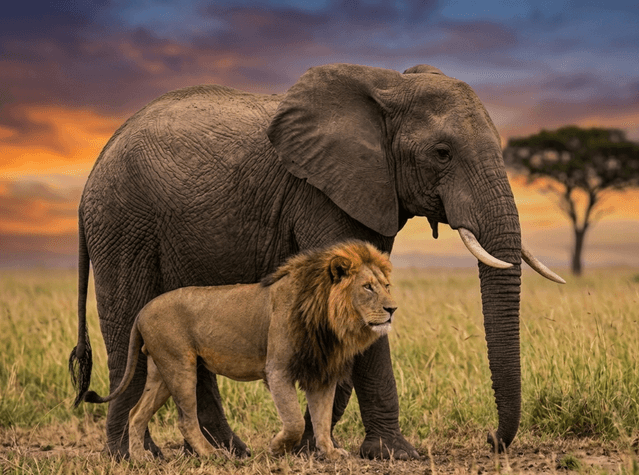
The newly launched State of Wildlife Resources in Uganda Report 2026, presented by Uganda Wildlife Authority (UWA), paints a troubling picture for two of the country’s most iconic “Big Five” species—lions and elephants.
Figures in the report indicate that Uganda’s lion population has fallen by about 30 percent in just ten years. From approximately 400 lions recorded in the 2014 census, the number has dropped to just 291 today.
Historical data shows an even steeper long-term decline, from over 1,000 lions in 1970.
UWA Executive Director, James Musinguzi acknowledged the increasing rate of population decline.
Lions, once widespread across Uganda’s savannas and rangelands, are now confined to a handful of protected areas, including Queen Elizabeth National Park, Murchison Falls National Park, and a smaller population in Kidepo Valley National Park.
In 2014, Uganda had 416 lions across five protected areas: 144 in Queen Elizabeth, 132 in Murchison Falls, 132 in Kidepo Valley, five in Tooro-Semliki and three in Lake Mburo. These numbers have since declined further, reflecting mounting pressure on the species.
A Continued Downward Trend as reported by different internal and external reports.
Lion numbers have been steadily shrinking over recent years.
2018: 495 lions, 2022: 300 lions, 2023: 275–343 lions, 2024/2025: 291 lions (down from 314 in the latest report)
Population Trends by Park
Queen Elizabeth National Park
2018: 65 lions, 2022/2025: 40 lions
Kidepo Valley National Park
15 years ago: 132 lions, 2022/2025: 12 lions
Murchison Falls National Park
2023: 240 lions, 2022/2025: About 230 lions
The report also flags a worrying decline in elephant populations, which dropped from 6,621 in 2021–2022 to 6,352 in 2023–2025—signaling that even relatively stable species are not immune to emerging threats.
Uganda’s elephant population has long been viewed as a conservation success story, recovering from a historic low of 700–800 in 1980—down from 30,000 in the 1960s—to recent highs.
1995: 1,900, 2014: 5,730, 2017: 5,808, 2020: 7,975, 2023: 7,995+, 2024: 6,621, 2024/2025: Now showing a decline to 6,352 – a 329 elephant deficit.
Population Distribution by Protected Area (2023/2024)
Queen Elizabeth National Park – 3,953
Murchison Falls National Park – 2,726
Kibale National Park – 566
Karenga Community Wildlife Area – 351
Kidepo Valley National Park – 295
Bwindi Impenetrable National Park – 106
Rwenzori Mountains National Park – 13
The drop, though not drastic, suggests mounting pressure from habitat encroachment, organized poaching for ivory and traditional medicine, and human-wildlife conflict, signaling that recovery gains are not yet secure.
According to UWA, multiple pressures are driving the decline of lions and elephants, with habitat loss identified as the leading factor. Uganda’s rapidly growing human population has intensified land conversion for settlements, agriculture and infrastructure, steadily encroaching on traditional wildlife ranges.
As wilderness shrinks, both lions and elephants are forced into smaller, fragmented habitats.
“Habitat fragmentation means lions cannot roam freely as they once did. This isolates populations, reduces genetic diversity, and increases the likelihood of conflict with communities,” Musinguzi said
For elephants, shrinking habitats also disrupt migratory routes and feeding patterns, often leading to crop raiding and heightened conflict with humans.
Human-wildlife conflict has emerged as one of the most urgent threats. When lions prey on livestock, some communities retaliate by poisoning carcasses—incidents that can wipe out entire prides in a single event. Similarly, elephants are often targeted in response to crop destruction, leading to injuries, deaths, or displacement.
Illegal wildlife trade continues to exert additional pressure. Lion parts are trafficked for traditional medicine and trophies, while elephants remain vulnerable to ivory poaching, despite strengthened enforcement efforts.
Musinguzi also points to invasive plant species degrading savannah ecosystems, reducing prey availability for lions and altering habitats for herbivores that elephants depend on. Climate change is compounding the problem through prolonged droughts, water scarcity and shifting vegetation patterns, further stressing wildlife populations.
He stressed that losing lions would have dire ecological consequences.
Lions are apex predators, regulating prey species such as antelope, buffalo and warthogs. Their disappearance could trigger ecological imbalance, including overgrazing and habitat degradation. Elephants, on the other hand, are ecosystem engineers and climate regulators —shaping landscapes by opening up forests, dispersing seeds and maintaining the health of savannah ecosystems.
Beyond ecology, the economic stakes are equally high.
Tourists from around the world flock to Uganda’s national parks—particularly Queen Elizabeth National Park, Murchison Falls National Park and Kidepo Valley National Park, in hopes of spotting lions and elephants.
“Lions are the second most sought-after wildlife species by visitors after gorillas. Every lion lost is a blow to tourism revenue, jobs for communities, and Uganda’s reputation as a prime wildlife destination,” Musinguzi reiterated.
The decline of elephants carries similar implications, given their prominence in wildlife tourism and their role in attracting high-value visitors.
In response, UWA says it is implementing a range of interventions to contain the trend. These include enhanced patrols and intelligence operations to combat poaching and poisoning, as well as community conservation programs aimed at promoting coexistence and reducing dependence on illegal wildlife activities.
Compensation and rapid response schemes for farmers who lose livestock or crops are also being expanded to reduce retaliation killings.
UWA is further strengthening transboundary conservation efforts with neighboring countries such as Tanzania and Kenya to protect shared wildlife corridors critical for both lions and elephants.
The agency says awareness campaigns are being rolled out to educate communities on the importance of conservation.
“We cannot succeed without communities. When people see value in conserving lions, whether through tourism income or support programs like the revenue sharing scheme, they become the best protectors of wildlife,” Musinguzi emphasized.
UWA is also investing in modern conservation technologies, including earth rangers, satellite collars, drones and advanced data systems, to improve monitoring and enable faster, evidence-based responses.
In his previous media briefings, Musinguzi reiterated his appeal of more funding for wildlife conservation, enforcing stricter penalties against poisoning and trafficking, and expanding protected areas to ensure lions have room to thrive.
“There must also be investment in scientific research and monitoring, so we can understand population trends and respond with evidence-based strategies,” Musinguzi reiterated.
UWA reiterates that Protecting lions and other animals is a national responsibility, urging communities to resist poisoning, and take pride in protecting wildlife and biodiversity.